Report — in preparation
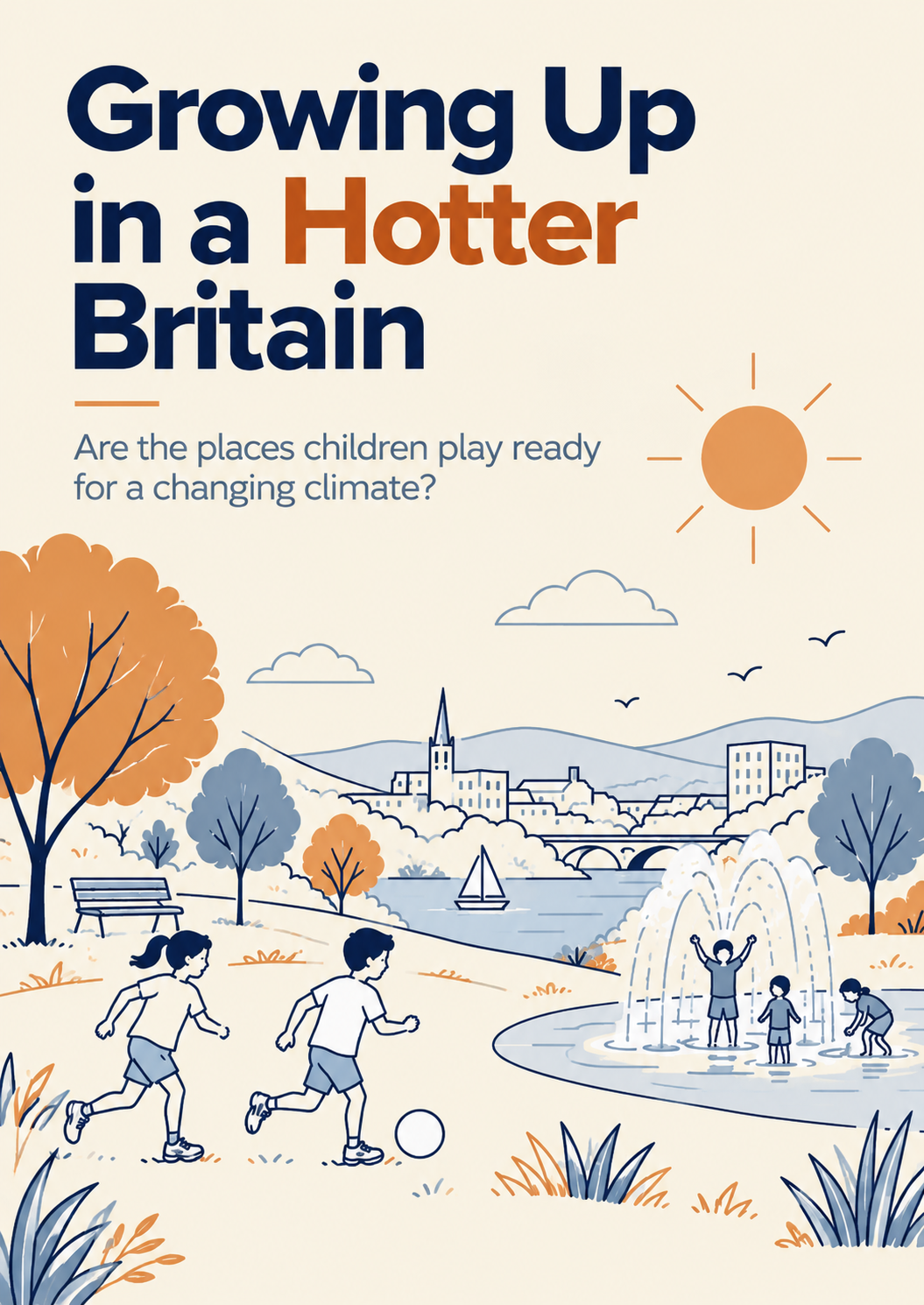
Growing up in a Hotter Britain: are the places children play ready for a warmer climate?
Key Figures
Why It Matters
Three Concepts
Concept 01
Shade Deserts
In shade deserts, playgrounds and routes to them offer little protection from solar radiation. Surface temperatures climb, equipment becomes unusable, and the time children can safely spend outdoors shrinks. Mapping these gaps is the first step toward targeting investment where it matters most.
Emerging Findings
Conclusion
Adapt the existing network.
Bradford's principal opportunity lies in adapting its existing network of public assets — increasing functional shade, improving thermal comfort, introducing cooling and water play where justified, and targeting new provision only where genuine accessibility gaps remain.